
dajimoD
ผู้เยี่ยมชม
superdia11001@gmail.com
What Is LWG Certified Leather? A Complete Guide for UK Buyers (6 อ่าน)
30 ก.ย. 2569 13:56
What Is LWG Certified Leather? A Complete Guide for UK Buyers
LWG-certified leather refers to leather manufactured at a facility that has been assessed under the standards of the Leather Working Group. The assessment examines several parts of the manufacturing process, including traceability, chemical handling, water consumption, energy use, waste, wastewater, environmental procedures, workplace health and safety, and social responsibility.
For UK consumers, LWG status can be a useful point of comparison when researching leather products. However, it should not be viewed in isolation. Leather type, construction, sourcing, compliance information, fit, durability, and care requirements should also be considered before purchasing.
What Is the Leather Working Group?
The Leather Working Group, commonly shortened to LWG, is an international organisation that creates standards and audit programmes for the leather supply chain.
Its Leather Manufacturer Audit evaluates leather manufacturing facilities against a range of environmental, chemical, social, and operational criteria.
What Does LWG Certification Mean?
LWG certification relates to the organisation or manufacturing facility that has undergone the relevant assessment. It does not automatically mean that every finished leather jacket or leather product sold by a retailer is individually certified by LWG.
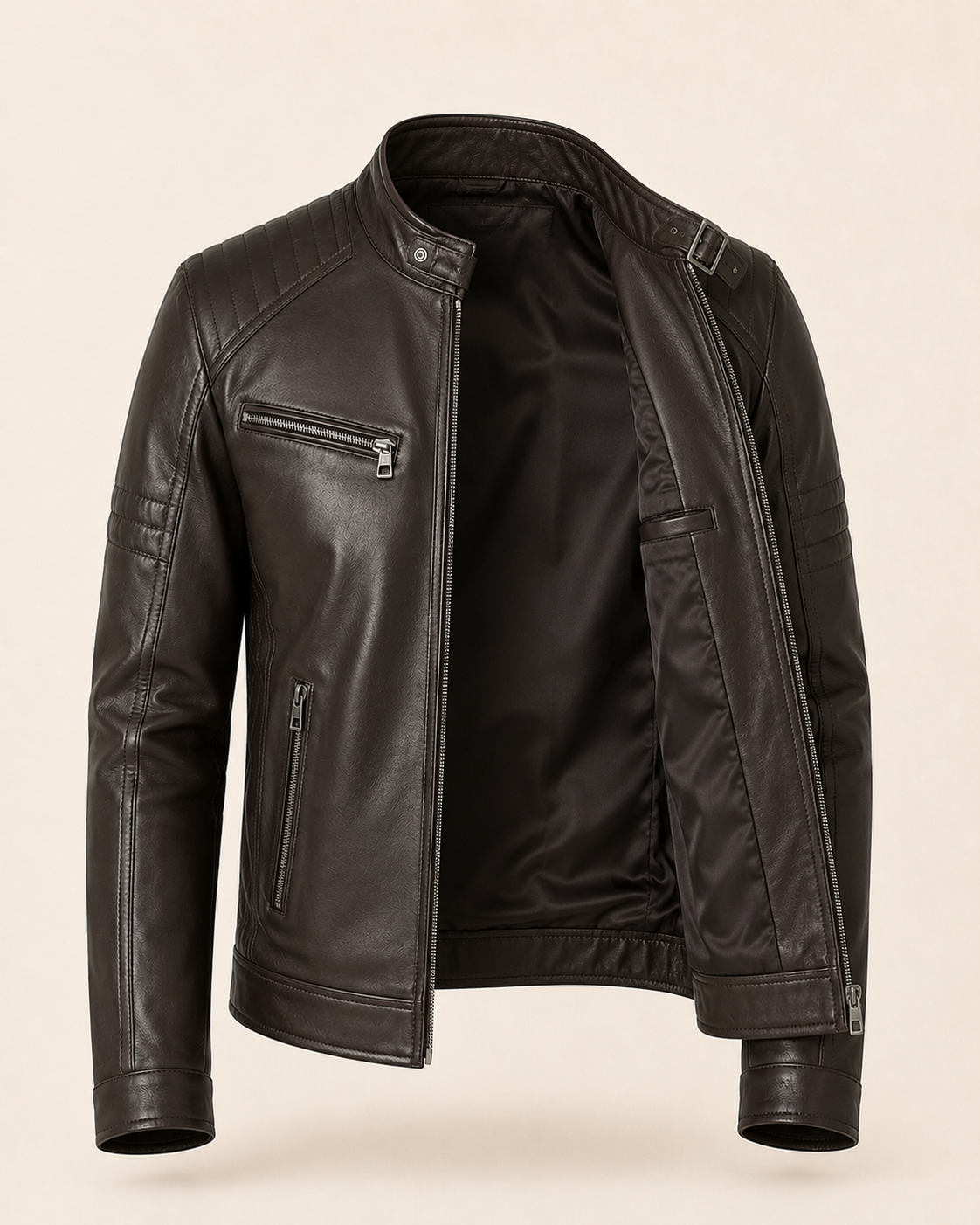
This difference is important when evaluating product descriptions.
For example, wording such as "leather sourced from LWG-certified tanneries" indicates that the claim concerns the leather's manufacturing source rather than certification of the complete finished product.
What Does an LWG Leather Audit Check?
The LWG Leather Manufacturer Audit covers 17 sections relating to different parts of leather manufacturing.
Area What it covers
Traceability Following leather through relevant production stages
Chemical management Selection, handling, storage, and use of chemicals
Restricted substances Managing substances subject to restrictions
Chromium VI Relevant controls and testing procedures
Water Measuring and managing water consumption
Energy Monitoring energy usage
Waste Procedures for handling and managing waste
Effluent Treatment and control of wastewater
Environmental management Broader environmental management practices
Health and safety Workplace hazards and protective measures
Social audit Relevant social responsibility requirements
Production data Monitoring manufacturing operations
Operating permits Applicable legal and operational permissions
The scope shows that an LWG audit is considerably broader than simply checking the characteristics of the finished leather.
How Is Leather Manufactured?
Leather manufacturing begins with hides or skins and involves a series of controlled processing stages.
A simplified sequence is Levant Leather:
Raw hide or skin → curing → soaking → liming → fleshing → splitting → tanning → dyeing → fatliquoring → drying → finishing
The exact sequence and techniques can differ depending on the leather being produced, the tannery, the tanning system, and the intended end use.
Raw Hides and Skins
Hides and skins are natural materials. Their thickness, grain, fibre structure, and natural marks can all influence the characteristics of the finished leather.
Curing
Curing is used to preserve hides and skins and help protect them before they are transported to and processed by a tannery.
Soaking
During soaking, the material is cleaned and rehydrated so it can undergo subsequent processing stages.
Liming and Fleshing
Liming prepares the hide for further treatment, while fleshing removes unwanted tissue and material from the underside.
Splitting
Splitting may be carried out when the leather needs to be brought to a particular thickness or when the hide is separated into layers.
Tanning
Tanning stabilises the hide and transforms it into durable leather. Chrome tanning and vegetable tanning are two established approaches used in leather production.
Dyeing and Finishing
Dyeing provides the desired colour. Fatliquoring and finishing can then affect characteristics such as flexibility, softness, surface appearance, and overall handle.
Why Is Water Management Important?
Water plays an important role in several stages of leather manufacturing.
The LWG Leather Manufacturer Audit considers water consumption, encouraging facilities to monitor their usage and identify areas where water can be managed more effectively.
Water management is not limited to how much water enters the manufacturing process. It also concerns what happens to water after it has been used.
What Is Effluent Treatment?
Effluent refers to wastewater generated during industrial operations.
Leather manufacturers need appropriate systems for treating wastewater and controlling its discharge in accordance with applicable requirements.
Effluent treatment is specifically included in the LWG leather manufacturing audit.
This is important because responsible water management involves more than reducing consumption. The quality of wastewater and the effectiveness of its treatment are also relevant considerations.
Why Does Chemical Management Matter?
Chemicals can be used at different stages of leather production, including tanning, dyeing, fatliquoring, and finishing.
Good chemical management involves more than choosing a chemical. It can include how substances are selected, stored, handled, recorded, and controlled throughout production.
LWG includes chemical management and restricted substances within its audit framework.
What Are RSL and MRSL?
RSL and MRSL refer to two related but distinct approaches to controlling chemicals.
RSL, or Restricted Substances List, generally concerns substances that are restricted in finished products or materials.
MRSL, or Manufacturing Restricted Substances List, concerns restricted substances found in chemical formulations used during manufacturing.
Knowing the distinction can help consumers and businesses interpret chemical compliance statements more accurately.
What Is Chromium VI in Leather?
Chromium VI, also known as hexavalent chromium, is different from the Chromium III chemistry commonly used in chrome tanning.
Under certain conditions, Chromium III can undergo oxidation and form Chromium VI. For this reason, appropriate manufacturing controls and testing can be important.
Chromium VI management is included within the LWG audit requirements.
Is Chrome-Tanned Leather Safe?
Chrome tanning should not automatically be regarded as unsafe.
Chrome tanning commonly involves Chromium III chemistry, while Chromium VI represents a separate chemical concern.
For consumers, a more useful consideration is whether the leather has been manufactured using appropriate controls and whether relevant chemical requirements and testing have been addressed.
Chrome Tanning vs Vegetable Tanning
Chrome tanning and vegetable tanning rely on different tanning systems.
It is not accurate to automatically describe one method as the more sustainable option without considering the wider manufacturing process and its environmental impacts.
Feature Chrome tanning Vegetable tanning
Main tanning chemistry Chromium-based compounds Plant-derived tannins
Common characteristics Flexible and consistent Distinctive ageing characteristics
Common uses Jackets, shoes, bags and upholstery Leather goods and premium products
Ageing Depends on leather finish Often develops a noticeable patina
Best choice Depends on intended application Depends on intended application
The tanning method is only one factor when considering leather performance, production impacts, and suitability.
Why Is Leather Traceability Important?
Traceability allows businesses to understand the origin of leather and follow its movement through different parts of the supply chain.
A simplified supply chain might look like:
Hide supplier → tannery → leather trader → garment manufacturer → retailer
When several businesses are involved, accurate records become increasingly important for understanding where materials originated and how they moved through production.
LWG identifies traceability as an important part of responsible leather production and is developing a Chain of Custody Standard to improve visibility across the supply chain.
Does LWG Certification Mean Leather Is Sustainable?
No.
LWG addresses significant areas including environmental management, water, energy, chemicals, wastewater, waste, and traceability. However, sustainability involves a much wider range of considerations.
Other factors may include raw material sourcing, transportation, product lifespan, repairability, reuse, and end-of-life options.
For this reason, an LWG claim should not be presented as proof that an entire finished leather product is automatically sustainable.
Does LWG Certification Mean Better Leather Quality?
Not necessarily.
LWG certification focuses on defined manufacturing, environmental, and supply-chain requirements. The physical quality of leather depends on other characteristics, including hide selection, grain, thickness, tanning, finishing, and the way the final product is constructed.
Consumers should therefore consider certification and physical product quality as separate factors.
What Do LWG Gold, Silver, and Bronze Mean?
LWG audit results can produce different certification ratings based on performance against the requirements of the applicable audit framework.
A higher rating represents stronger performance against the relevant assessment criteria.
However, the rating does not mean that every finished product manufactured using leather from that facility will automatically be softer, stronger, longer-lasting, or better designed.
What Is Changing in LWG Standards?
LWG is developing its LWG Sustainability System as a further development of its standards programme.
The organisation states that this system includes a Leather Production Standard, Chain of Custody Standard, and Decarbonisation Framework, with Protocol 7 planned to be replaced in 2027.
The newer framework is intended to broaden attention to areas such as responsible sourcing, traceability, environmental performance, social responsibility, and carbon management.
How Should UK Buyers Check Leather Claims?
Begin by reading the precise wording used on the product page.
Check whether the claim refers to the tannery, leather manufacturer, supplier, or finished product.
Buyers should also look at:
Leather type
Sourcing information
Certification details
Chemical compliance
Product construction
Size measurements
Care instructions
Returns policy
Clear and specific information is particularly useful when purchasing leather jackets online, where customers cannot physically inspect the material before ordering.
What Makes a Quality Leather Jacket?
A responsible supply chain can be an important consideration, but the finished jacket must also meet the buyer's practical requirements.
Consider the leather type, stitching, zips, lining, pockets, seams, hardware, and overall construction.
Full-Grain Leather
Full-grain leather retains the outer grain layer of the hide and can display natural markings from the original material.
With use, it may develop a distinctive patina, which is one reason this leather is often valued for its natural appearance.
Cowhide Leather
Cowhide is frequently used for jackets where a more structured and substantial feel is preferred.
It is commonly associated with biker jackets, café racers, and traditional leather outerwear.
Lambskin Leather
Lambskin is generally recognised for its soft feel and flexibility.
It can be suitable for lightweight jackets and fashion-focused designs where comfort and drape are important.
Sheepskin
Sheepskin is known for its soft texture and insulating characteristics and can be used in designs intended for colder conditions.
Suede
Suede has a distinctive napped surface that gives it a different appearance and feel from smooth leather.
It can require additional care because moisture, staining, and incorrect cleaning may affect its surface.
How Should Buyers Evaluate Leather Products?
When researching a leather jacket, consumers can consider material sourcing alongside the details of the finished garment.
Look for clear information about the leather type, manufacturing source, certification claims, construction, sizing, and care.
For shoppers interested in a more personalised fit, custom leather jacket services may also provide options around leather selection, colour, design, fit, and measurements.
This creates two separate questions for an online buyer:
Where does the leather come from?
Is the finished jacket suitable for my requirements?
Both questions are worth answering before placing an order.
Frequently Asked Questions
What does LWG stand for?
LWG stands for Leather Working Group.
It develops standards and audit programmes relating to leather manufacturing and responsible supply-chain practices.
Is LWG a tannery?
No.
LWG develops standards and the associated certification framework. Eligible leather businesses and manufacturing facilities can undergo the relevant audit.
Is LWG certification the same as product certification?
Not automatically.
LWG certification applies to the relevant organisation or facility assessed under the applicable standard. It should not automatically be interpreted as certification of every finished product.
Is LWG leather automatically sustainable?
No.
An LWG certification indicates performance against defined LWG requirements. Sustainability encompasses a broader range of environmental, social, sourcing, production, use, and end-of-life considerations.
Does LWG mean better leather quality?
No.
Leather quality can depend on the hide, tanning process, thickness, finishing, grading, and construction of the finished item.
Is vegetable-tanned leather always more sustainable?
No.
The broader production process needs to be considered, including water use, energy consumption, chemicals, wastewater, waste management, and material sourcing.
What is leather traceability?
Leather traceability means being able to follow leather through relevant stages of its supply chain.
Improved traceability can provide greater visibility into where materials originate and how they move between different businesses.
Why is Chromium VI tested?
Chromium VI can cause skin sensitisation, which is why appropriate production controls and testing can be relevant when assessing chrome-tanned leather.
What is the difference between RSL and MRSL?
RSL refers to restrictions on substances in finished products or materials.
MRSL concerns restrictions on substances contained in chemical formulations used during manufacturing.
Can an LWG-certified tannery produce leather for a poorly made jacket?
Yes.
The audit of a tannery and the construction quality of a finished jacket are separate matters.
A jacket can use leather sourced from an audited tannery while still having weaknesses in areas such as stitching, hardware, lining, fit, or overall construction.
Should I look for LWG when buying leather in the UK?
It can be one useful factor to consider.
UK buyers should also examine the leather type, construction, sourcing information, compliance claims, fit, care requirements, and transparency of the retailer.
Leather Buying Checklist
Before ordering a leather jacket, consider checking:
Exact leather type
Tannery or sourcing information
Certification wording
Chemical compliance information
Jacket measurements
Construction details
Lining and hardware
Care instructions
Returns policy
Delivery information
A well-presented product page should make these details reasonably clear and easy to understand.
Final Thoughts
LWG certification provides useful visibility into parts of the leather supply chain that customers normally cannot see.
Its assessment covers areas such as water management, wastewater, chemical control, traceability, waste, energy, environmental management, and workplace practices.
However, an LWG claim should not be treated as a substitute for evaluating the complete leather product.
For UK buyers, a broader approach is more informative: consider where the leather originates, how it is processed, what the certification actually covers, how the jacket is constructed, and whether the retailer provides clear information to support its claims.
Looking at these factors together makes it easier to compare leather jackets using meaningful product information rather than relying solely on marketing terminology. It also helps buyers identify a product that fits their requirements for material characteristics, construction, appearance, comfort, and expected long-term use.
122.129.65.126
dajimoD
ผู้เยี่ยมชม
superdia11001@gmail.com