
Best Dining Spots in Islamabad
ผู้เยี่ยมชม
30websiteproject@gmail.com
Best Dining Spots in Islamabad (5 อ่าน)
5 พ.ค. 2569 04:19
A modern planned city that is well-maintained and well-organised, Islamabad (Urdu: اسلام آباد) is Pakistan's clean, calm, and green capital. Founded in the 1960s, it attracts people from all over Pakistan, and hosts a large number of diplomats, politicians and government employees, making it one of the nation's most cosmopolitan and urbanized cities. Although it is only the country's ninth largest city, its metropolitan area (encompassing the neighbouring city of Rawalpindi) is the country's third largest conurbation, with a population of over 4.5 million. Lying on the Pothohar Plateau in the north-east, within the Islamabad Capital Territory (ICT), it is regarded as the most developed city in Pakistan. Visit for more information Best Restaurants in Islamabad
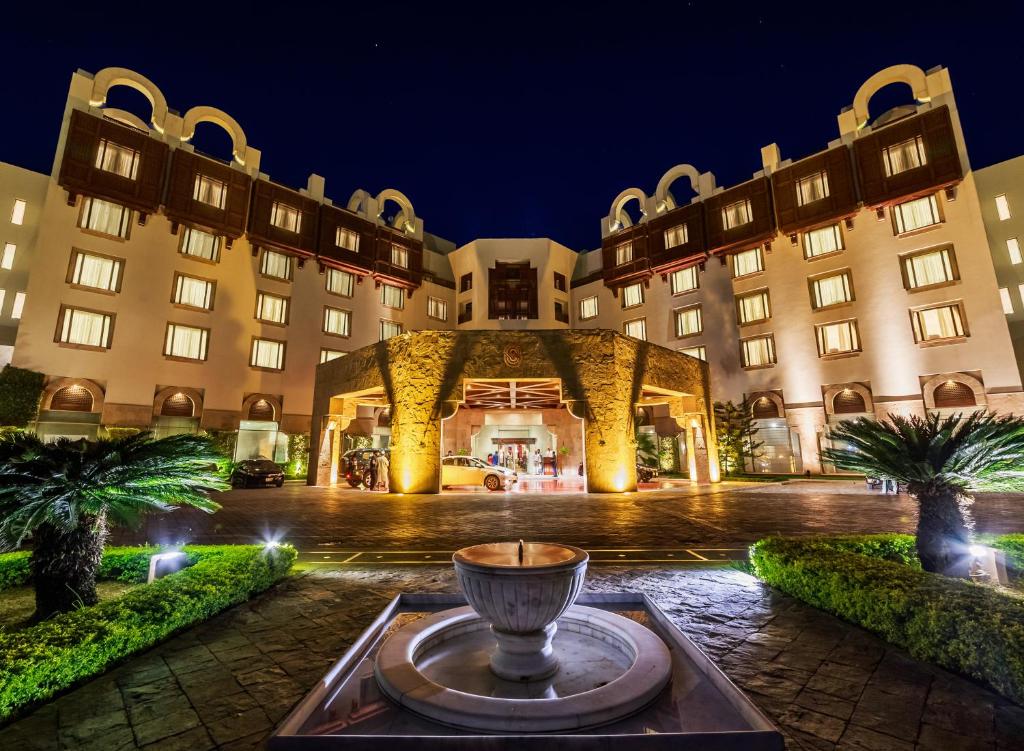
Although the majority of the population in Islamabad traditionally have been employees of the Federal Government, the wealth of the Musharraf years fuelled a boom in Islamabad and it has become an important financial and business centre. In the last decade there have been vast changes in the city's traditional reputation. From it being a typical 9-to-5 city, Islamabad has become more lively with many new restaurants and hotels springing up to service this new wealth. A lot of international food chains have opened, and generally a great improvement in night life with increasing shopping areas opening till late. However, during winter season streets are considerably quiet after dark.

Even now, Islamabad remains a city where people come from all over the country to enjoy its peaceful, noise-free atmosphere with a lot of greenery and nice surrounding scenery. It also serves as a base camp for people from the south and coastal areas like Karachi, visiting relatively lush valleys such as Swat and Kaghan together with northern areas like Gilgit, Hunza, Skardu and Chitral in the Himalayas mountains.
In reality, sectors F-5 and G-5 are limited to a much smaller area than indicated here.
ICT covers an area of 1,165.5 km2 (450 mi2), and 906 km2 (349.8 mi2) of that is Islamabad proper, which is divided into five zones:
Travellers will soon notice that Zones 1 and 2 are laid out on a grid system comprising sectors. Each sector is identified by a letter of the alphabet and a number, and covers an area of approximately 2 × 2 km (unless it is crosscut by another zone's boundary). Each sector is subdivided into four numbered sub-sectors (e.g. E-7/1, E-7/2, E-7/3, and E-7/4). The sectors are lettered alphabetically A–I and numbered 5–17. There are no sectors numbered 1–4, as the area to the northeast that would otherwise have contained such sectors is not subject to the sector scheme (it also encompasses northeastern "halves" of G-5 and F-5, i.e. what would have been G-5/3, G-5/4, F-5/3, and F-5/4). The following are some of the best-known sectors:
The city of Islamabad is on the Pothohar Plateau which is one of the earliest known sites of human settlement in Asia. Some of the earliest Stone Age artifacts in the world have been found on the plateau, dating from 500,000 to one million years ago. The crude stones recovered from the terraces of the Soan River testify to the endeavours of early man in the inter-glacial period. Items of pottery and utensils dating back to prehistory have been found in several areas.
Limited excavations have confirmed evidence of prehistoric cultures. Relics and human skulls have been found dating back to 5000 BCE that show this region was home to Neolithic man, who roamed the banks of the Soan River. During the Neolithic, people developed small communities in the region around 3000 BCE. At one end of the Indus Valley Civilization, the area was an early habitation of the Aryan community in Central Asia. Their civilization flourished here between the 23rd and 18th centuries BCE. Many great armies - such as those of Alexander the Great, Genghis Khan, Timur and Ahmad Shah Durrani - used the corridor through the region on their way to invade the Indian Subcontinent. A Buddhist town once existed in the region and remains of a stupa have been identified in the G-12 sector. Modern Islamabad also incorporates the old settlement of Saidpur. The British took control of the region from the Sikhs in 1849 and built Asia's largest cantonment in the region in Rawalpindi.
When Pakistan gained independence in 1947, Karachi becomes its first capital. In 1960, Islamabad was constructed as a forward capital for several reasons. Traditionally, development in Pakistan was focused on the colonial centre of Karachi, and President Ayub Khan wanted it equally distributed. Moreover, Karachi having tropical weather conditions, was at one end of the country, making it vulnerable to attacks from the Arabian Sea. Pakistan need a capital that was easily accessible from all parts of the country was needed. Karachi, a business centre, was also considered unsuitable partly because of intervention of business interests in government affairs. The newly selected location of Islamabad was closer to the army headquarters in Rawalpindi and the disputed territory of Kashmir in the north.
In 1958, a commission was constituted to select a suitable site for the national capital with particular emphasis on location, climate, logistics, and defence requirements along with other attributes. After extensive study, research, and a thorough review of potential sites, the commission recommended the area northeast of Rawalpindi in 1959. A Greek firm of architects, Konstantinos Apostolos Doxiadis, designed the master plan of the city, based on a grid plan and triangular shape with its apex towards the Margalla Hills. The capital was not moved directly from Karachi to Islamabad; it was first shifted temporarily to Rawalpindi in the early 1960s and then to Islamabad when the essential development work was completed in 1966.
Islamabad has attracted people from all over Pakistan, making it one of the most cosmopolitan and urbanised areas of Pakistan. As the capital city it has hosted a number of important meetings, such as the South Asian Association for Regional Cooperation summit. In October 2005, the city suffered some damage due to the 2005 Kashmir earthquake having a magnitude of 7.6. Islamabad has experienced a series of terrorist incidents including the July 2007 Siege of Lal Masjid (Red Mosque), the June 2008 Danish embassy bombing, and the September 2008 Marriott bombing. In 2011, four terrorism incidents occurred in the city, killing four people, including the murder of the then Punjab Governor Salmaan Taseer. Tragic air crashes also took place here: on 28 July 2010, Airblue Flight 202 crashed in the Margalla Hills killing all 152 flight crew and passengers on board and Bhoja Air Flight 213 carrying 121 passengers crashed while making the final approach for landing, killing all on board on 20 April 2012.
Today, Islamabad is considered by some as one of the most extensively and successfully planned cities in South Asia. The city is home to many migrants from other regions of Pakistan and has a modern culture that is not so dissimilar to other internationalised cities.
The climate of Islamabad has a typical version of humid subtropical climate, with five seasons: Winter (November–February), Spring (March and April), Summer (May and June), Rainy Monsoon (July and August) and Autumn (September and October). The hottest month is June, where average highs routinely exceed 47 °C (117 °F). The wettest month is July, with heavy rainfalls, evening thunderstorms, and the possibility of cloudburst and flooding. The coolest month is January. Islamabad's micro-climate is regulated by three artificial reservoirs: Rawal, Simli, and Khanpur Dam. Winters generally feature dense fog in the mornings and sunny afternoons. In the city, temperatures stay mild, with snowfall over the higher elevations points on nearby hill stations, notably Murree and Nathia Gali. The temperatures range from 0 °C (32 °F) in January to 47 °C (117 °F) in June. The highest recorded temperature was 54.6 °C (130.3 °F) on 23 June 2005, while the lowest temperature was −10 °C (14 °F) on 17 January 1967. The city has recorded snowfall.
To go to the city center take orange Metro Bus line (cheaper) or a taxi. The taxi costs about US$15 (2025). Drivers may ask more, but bargain hard and set the price before the ride.
Despite Islamabad have its railway station in sector I-9, majority travel through the railway station in the neighbouring city Rawalpindi, which is a major railway station and has good railway connections with various major cities including Karachi, Lahore & Peshawar.
Pakistan Railways[dead link] premium Green Line service between Islamabad and Karachi offers free Wi-Fi, breakfast, newspaper among other basic facilities to its passengers. The train is air-conditioned and has few stops along the route such as Hyderabad, Lahore and Rawalpindi. Tickets on this route are more expensive compared to other trains.
If you want a paper city map (you'll love to have one, just to see the difference in map making), you can buy one in the bookstore in Centaurus Mall.
Taxis in Islamabad are abundant and popular. They are generally safe, but you may be initially shocked by the lack of safety belts, or lack of habit of using them. Most characteristic taxi car is a small Suzuki Mehran (people say these don't break), without taxi signs.
Taxi costs around Rs 200 (2025) per sector traveled, depending on your bargaining skills. Travel to and from airport is more expensive, you can bargain down to US$15. Prices will be higher at night, especially departing from places like Jinnah Super (F-7). It is always advisable to agree the fare before traveling.
There are also motorcycle taxis, cheaper than cars. They may be handy, but for your safety (you ride without a helmet, pretty fast and among other traffic) you should consider taxi car instead.
Most of the people prefer using Careem or InDrive, as ride-sharing is one of the cheaper means of transportation. The cheapest way to travel is through calling Careem Bike.
Car hire is also a good way of getting around. Although road signs and directions are only available on main roads, the city's grid and numbering system make it relatively easy to find your way around. There are various car hire companies in Blue Area F-6 and also in G-8 Markaz where cars can be hired with drivers. Most major hotels have their own car hire services and are relatively cheap. A tip to the driver at the end of the booking period is always appreciated but not mandatory.
The city has implemented two bus rapid transit (BRT) lines, known locally as Metro Bus. The red line travels from the northeast corner of Islamabad to Rawalpindi Saddar. The orange line connects (at Peshawar Morr Interchange also known as G-9 interchange; Faiz Ahmad Faiz stop) this to the airport via shuttle. There are also blue and green lines heading south and east, but these use a different ticketing system and run on the highway with regular traffic.
Regarding the red and orange lines, the fleet uses modern articulated buses on dedicated roads without traffic lights and collisions, like a real metro. The front most section is reserved for women and children and stops are marked and announced in both Urdu and English. Although the system is built for both single tickets and rechargeable cards, it seems in practice only single tickets are available from the staffed ticket booths for Rs 30 (Jan 2025). The top half of the ticket is taken upon entering the platform, and the bottom half is needed to exit. Buses can fill up, so it may be wise to anticipate your station and/or be assertive about exiting at your stop.
The orange line shuttle from the airport costs Rs 90 (Jan 2025) and can be found in the parking lot outside at row 22.
Museums and art galleries
Parks, viewpoints and green spaces
Mosques, shrines and monuments
Travellers may also be interested in the Federal Government offices, Parliament House, the official residences of the President and Prime Minister; together with the Diplomatic Enclave – an area next to the Parliament House dedicated to foreign embassies and missions appointed to Pakistan.
The Margalla Hills are effectively foothills of the Himalayas – and are very easily accessible from Islamabad. However these are quite big, steep hills, and shouldn't be underestimated – if you are planning on a walk up to the top of the first ridge (i.e. where the shuttered Monal restaurant is) then sturdy footwear, a large water bottle, and a change of t-shirt are necessary (good chance you'll be drenched in sweat by the time you get to the top). Between March and November it is best to start walking in the early morning (before 7:30AM, or 6:30AM in the height of summer) as it is uncomfortably hot during the day.
Go karting - F1 Traxx - Lake View Park (Rawal Lake) - there is another track in Bahria Town, Rawalpindi
Para Gliding – at Margalla Hills. The Pakistan Adventure Foundation is the place to call, reservations are recommended.
Cycling – Mountain biking is fast becoming a much-loved activity because of the weather and the terrain. If you're in the mood for some adventurous cycling down one of Islamabad's beautifully scenic bike trails, get your bike ready. Information can again be had from the ASG's hiking publication. Cheap bikes can be purchased for Rs 6,000-10,000 in Islamabad and Rawalpindi. Alternatively you can hire decent quality bikes from K2Riders[dead link] - based in F8/2.
Foreign currency exchange is easily available in Centaurus Shopping Mall and from F-6 Blue Area (the central business district along the Jinnah Avenue) where there are hundreds of offices (check with a few of them before going ahead with it).
Each sector having its own central shopping area (or markaz) where all local amenities are found. Some of the more popular markazes are the F6 Markaz (aka Super Market) F7 Markaz (aka Jinnah Market), G6 Markaz (aka Melody Park), G9 Markaz (aka Karachi Company) and so on. There isn't much going on in the markets of F8, G7 an G8 that would interest the tourist. Each markaz has its own peculiarities and each one is worth visiting individually. However most things are catered for in each markaz, i.e. clothing, shoes, fast food etc. There's always a real buzz in the evenings when all the shoppers come out, particularly in the run up to Eid.
At first glance the visitor may feel that Islamabad offers little to excite the taste-buds, however beneath the surface there is a thriving restaurant scene. There are many typical dhabbas (small restaurants) which offer traditional food. Many of the better restaurants are away from the main markets of F6 and F7. Most do not serve alcohol, but some allow you to bring your own. Call ahead to ask.
For ease of use restaurants are organised by sector:
"Inkantray" (Incantare) a not-so-nice place for hangout with friends. Mostly for shisha. In basement of Pizza Hut.
Drinking alcohol in public is nominally banned although most of the top end hotels have their own bars, as do some of the larger embassies if you befriend a diplomat. The windowless basement sports bar in the Marriott is probably the most frequented of the hotel bars.
Most Pakistanis though would find it extremely rude and offensive if you show or drink alcohol in public. Night Life is exists, but it's not easy to find. There are no open 'night clubs' in the city - however periodic special events are organised in various venues about once every two months - spread by word-of-mouth. Less excitingly some of the embassy clubs in the diplomatic enclave have 'dance parties' and the like but these tend to be exclusively expatriate and rather low brow.
Non-Muslim visitors can obtain from the local police a so-called 'non-Muslim declaration'. This permit gives you the right to legally buy a limited amount of alcoholic drinks like bottles of wine or beer. For instance, Pakistan's small Christian minority is by law allowed to consume alcohol.
Try local brands like Murree Brewery, in addition to that there are other brands such as Budweiser and Bavaria with non-alcoholic beer. There is a small off-license around the side of the Marriot hotel (next to the dry cleaners) - you'll need a 'non-Muslim declaration' (or maybe just a foreign passport if you turn on the charm) to be able to buy anything.
In soft drinks, all the usual western brands are available but better to try local limca cola which makes "pop" sound when opened. you can also try Pakola; Pakistan's premier soft drink brand which is available in different flavours like Ice cream soda, Lychee, Orange, Raspberry, Apple sidra, Vino, Double cola, Bubble up etc. A 'fresh lime 7-up' is a better alternative for people who don't like standard soft drinks.
In other drinks try strawberry milk shakes and dhamaka soda (dhamaka means bang - the bang that happens when one opens the bottle) from Jinnah super market.
Best quality for money hotels are in G-9.
Budget accommodation in Islamabad is fairly lacklustre and of questionable cleanliness. There are many guesthouses around the city that make a nice alternative to a hotel.
The police have set up numerous checkpoints on roads to sensitive buildings and on the roads entering the city. These are usually harmless and they'll wave you through, but to access Constitution Avenue (including the Serena hotel) the police will want to look in the boot of your car.
While travelling in city, you should keep your national identity card, passport, or driving licence with you to prove your identity.
Crime-wise Islamabad is safe. Men can walk pretty much anywhere in the city day or night with little to fear. Lone women will attract male attention, particularly in areas of the city not often frequented by westerners. The Red Mosque in G6 and immediate surrounds aren't recommended given the history attached to this area.
The Police emergency number is 15. There are various Police stations in the city with staff available 24/7.
Bottled water is a good idea. Although water in Islamabad is generally clean, it is mainly sourced from mountain water and tube wells and may contain minerals your system is not used to. It may also not be stored and carried in the cleanest of ways.
Most locals do not drink tap water but instead draw water from government-installed filtration plants. Tap water is normally boiled and it is strongly suggested that you carry bottled water and request it at all food places. If you are unsure about the hygiene of a particular place, try to avoid ice in all your drinks.
There are 3 major hospitals in Islamabad: the Pakistan Institute of Medical Sciences (also known as PIMS) next to G-8 Markaz, Shifa International Hospital in H-8/1 and the Poly Clinic in sector G-6.
Also, there are various private hospitals in every sector in Islamabad providing extensive health care with different price ranges. Ali Medical Centre in F-8 Markaz is one of them.
The Blue Area and Super Market (F-6) have the two most trustworthy pharmacies: Shaheen Chemists and D. Watson. Both these stores are reliable and will be able to offer sound advice for minor ailments. They also carry a wide variety of European and American foods, albeit at a high price. They may even have a doctor at the facility, should a quick suggestion be required.
Although Islamabad may look relatively modern, superficially hinting at a Western lifestyle, there are some basic guidelines to keep in mind given the cultural values of Pakistan's society:
In F-6, near Total petrol station, there is a governmental tourist information center, open I-V 9:00-15:00.
The Dawn, The News, The Express Tribune, The Nation and The Daily Times are national newspapers in English supplemented with local news sections.
Business Recorder is the only newspaper providing national and international business news. However, newspapers like the International Herald Tribune, Financial Times, Khaleej Times, Gulf News, and London's Sunday Times, are also available. These international newspapers usually arrive in Islamabad a day after publishing.
All newspapers (international, national and local) are available at book stores in leading hotels like Serena & Marriott. They can also be purchased from leading book stores such as London Book House (Kohsar Market in sector F-6/3), Saeed Book Bank (Jinnah Super Market in sector F-7), and Mr. Books (Super Market in sector F-6).
139.135.55.4
Best Dining Spots in Islamabad
ผู้เยี่ยมชม
30websiteproject@gmail.com