
shell
ผู้เยี่ยมชม
benducket3211@gmail.com
How Can a Reliable Micro Switch Manufacturer Improve Product Quality and Performance? (19 อ่าน)
30 ต.ค. 2569 16:38
Choosing the right micro switch manufacturer is essential for businesses that depend on reliable electrical components, accurate switching operations, and long-lasting product performance. Micro switches are widely used in household appliances, industrial machinery, automotive systems, medical equipment, and electronic devices. Although these components are small, they play an important role in controlling electrical circuits and ensuring that equipment operates safely and efficiently. Working with an experienced manufacturer helps businesses obtain high-quality micro switches that meet their technical requirements and production standards.
As industries continue to develop more advanced electronic systems, the demand for compact, durable, and precise switching components is increasing. Manufacturers must therefore focus on product consistency, innovative designs, strict quality control, and dependable customer service. Businesses searching for a trusted micro switch supplier should consider manufacturing experience, product specifications, customization capabilities, and compliance with relevant industry standards. Understanding these factors can help buyers identify a suitable manufacturing partner and establish a reliable supply chain.
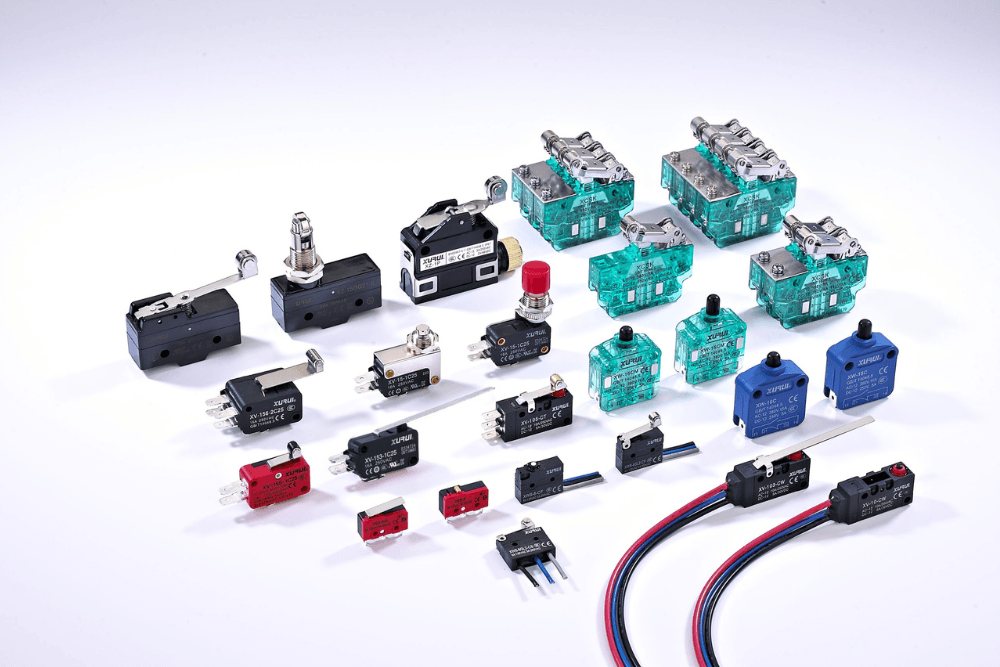
Understanding Micro Switches and Their Industrial Applications
A micro switch is a small electrical switch that operates through a mechanism requiring relatively little physical movement. It typically uses a spring-loaded mechanism that changes the electrical contact state when an actuator is pressed or released. This quick switching action makes micro switches suitable for applications that require precise detection, dependable circuit control, and consistent operation.
A professional micro switch manufacturer develops different switch designs to meet the requirements of various industries. These products may differ in operating force, actuator style, electrical rating, contact configuration, dimensions, and environmental protection. Selecting the correct design is important because every application has specific electrical and mechanical requirements.
Micro switches are commonly used in household appliances such as washing machines, refrigerators, microwave ovens, and air conditioners. In these applications, they may detect whether a door is closed, confirm that a component has reached a particular position, or control the operation of an internal mechanism. Reliable switching performance helps appliances function correctly and supports their safety features.
Industrial automation is another important application area. Manufacturing equipment often requires switches to detect the position of moving parts, monitor machine guards, and control mechanical operations. Micro switches can provide dependable feedback to control systems when selected and installed according to the equipment's requirements.
The automotive industry also uses micro switches in door locks, seat adjustment mechanisms, control panels, and other vehicle systems. Their compact construction makes them useful in locations where installation space is limited. Depending on the application, manufacturers may offer designs with protective housings or sealing features to help resist dust, moisture, and other environmental conditions.
Medical equipment, office machines, vending machines, and electronic control systems also rely on miniature switching components. Since these applications can have different operating requirements, businesses should evaluate the switch's specifications carefully rather than choosing a product based on physical size alone.
Essential Qualities of a Professional Micro Switch Manufacturer
Selecting a dependable micro switch manufacturer requires careful consideration of product quality, technical expertise, manufacturing capabilities, and customer support. A reliable manufacturing partner should understand the requirements of its target industries and provide components designed for consistent performance under specified operating conditions.
Product quality is one of the most important considerations. High-quality micro switches should provide consistent actuation, dependable electrical contact, and suitable mechanical durability. Manufacturers can support these objectives through material selection, controlled production processes, dimensional inspections, and electrical testing. Buyers should ask about available test reports and quality management procedures when evaluating potential suppliers.
Electrical specifications are equally important. A micro switch must be suitable for the voltage, current, and type of electrical load involved in its intended application. Resistive and inductive loads, for example, can place different demands on switching contacts. Buyers should review the manufacturer's ratings and technical documentation to ensure that the selected component is appropriate for the intended circuit.
Mechanical durability is another major factor. The operating life of a micro switch depends on its design, materials, load conditions, operating speed, and environmental exposure. Manufacturers may provide mechanical and electrical endurance ratings to help customers compare products. These ratings should be interpreted according to the specified test conditions because electrical life can differ from mechanical life.
Customization capabilities can also distinguish an experienced micro switch supplier from a manufacturer offering only standard products. Some businesses require specific actuator shapes, mounting arrangements, terminal configurations, operating forces, or housing dimensions. A manufacturer with engineering and product development capabilities may be able to provide a suitable customized design or recommend an existing model that meets the application requirements.
Certifications and compliance documentation deserve attention as well. Depending on the target market and application, buyers may need components that meet relevant safety, environmental, or industry requirements. They should verify the actual certifications applicable to the specific product rather than assuming that every item from a manufacturer has the same approvals.
Communication and delivery performance are also essential when establishing a long-term manufacturing relationship. Clear technical communication helps prevent specification errors, while dependable production scheduling supports uninterrupted manufacturing operations. Businesses should evaluate sample availability, minimum order quantities, lead times, warranty policies, and the manufacturer's ability to maintain consistent product availability.
Micro Switch Manufacturing Technology and Quality Control
Modern micro switch manufacturing combines precision engineering, carefully selected materials, and systematic quality control. The production process may involve metal stamping, contact fabrication, spring assembly, housing molding, terminal installation, and final component testing. Each stage can influence the reliability and performance of the finished switch.
Contact materials play an important role in electrical performance. Depending on the intended application, manufacturers may use different conductive materials or contact finishes to support suitable conductivity, wear resistance, and switching behavior. The correct selection depends on electrical ratings, expected service life, operating conditions, and cost requirements.
The actuator and internal spring mechanism must also be designed to provide consistent switching characteristics. Variations in mechanical dimensions or spring behavior can affect operating force, travel distance, and contact movement. Precision manufacturing and inspection help maintain consistent performance across production batches.
A quality-focused micro switch manufacturer may perform several types of testing throughout production. Electrical continuity checks help confirm that contacts change state correctly. Dimensional inspections verify that components meet design specifications, while endurance testing evaluates switching performance under defined operating conditions. Additional tests may be appropriate for temperature resistance, vibration, moisture protection, or other environmental requirements.
Traceability can further improve manufacturing quality. When production batches and materials are properly documented, manufacturers and customers can investigate problems more effectively and identify potential sources of defects. This information can be particularly valuable for businesses producing large quantities of equipment or operating in industries with strict quality requirements.
Automation and modern inspection technologies can help manufacturers improve consistency and production efficiency. Automated assembly systems may reduce certain types of manual variation, while monitoring systems can identify manufacturing problems earlier. However, equipment alone does not guarantee product quality. Effective process control, trained personnel, appropriate testing, and continuous improvement remain essential.
Businesses evaluating a micro switch factory should therefore look beyond production capacity. They should consider the manufacturer's ability to maintain stable specifications, identify defects, manage changes, and provide technical support throughout the product lifecycle.
Conclusion: Choosing the Right Micro Switch Manufacturer for Long-Term Success
Choosing the right micro switch manufacturer can significantly influence product reliability, manufacturing efficiency, and customer satisfaction. Businesses should evaluate electrical ratings, mechanical durability, product consistency, customization options, quality control procedures, and delivery capabilities before making a purchasing decision.
Understanding the intended application is the first step toward selecting a suitable micro switch. Buyers should clearly define their operating conditions, electrical requirements, expected service life, mounting needs, and environmental exposure. Comparing these requirements with manufacturer specifications makes it easier to identify components that offer appropriate performance and value.
43.242.176.100
shell
ผู้เยี่ยมชม
benducket3211@gmail.com